
The Muster Sheet Fields Explained
Muster Rolls were quarterly lists of enlisted naval personnel that were taken on every vessel during the Civil War. Each Muster Sheet contains a series of Fields that provide a different piece of information about the sailors aboard. It is these Fields that the computer has been transcribing, based on training data from Citizen Scientists collected in Phase 1. The individual transcriptions being assessed in Phase 2 will each contain the target Muster Sheet Field at the top of the image. This will help you in determining what Field the computer was transcribing and also help you to interpret the text when the computer has got the transcription wrong. The different Muster Sheet Fields you will encounter are:
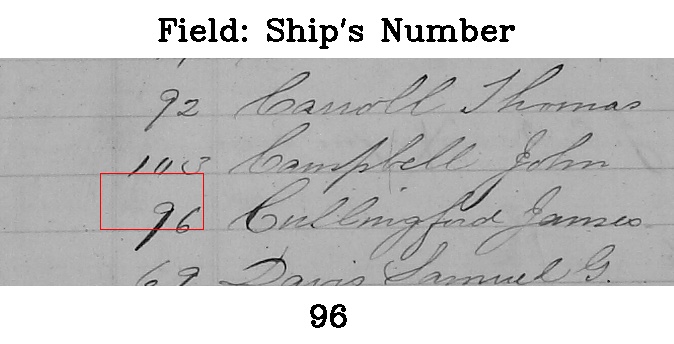
– Ship’s Number
Each crewman was given a ship’s number, a numeric designation which allowed him to be uniquely identified. It normally is the first piece of information detailed on the muster sheet.
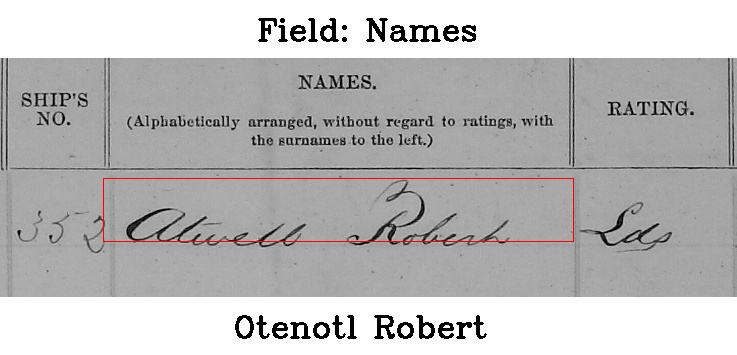
– Name
The name of the individual crewmen, with surname first and then forename. Officers did not always get the men’s names right when entering them, particularly if they were immigrants. When transcribing here, we are seeking to record what the officer wrote, even if he appears to have made a mistake.
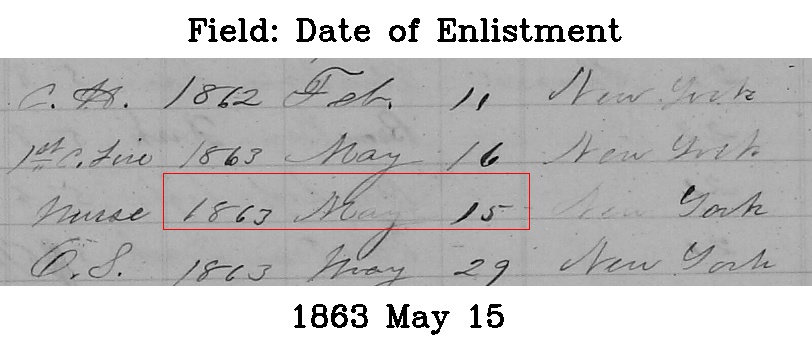
– Date of Enlistment
The date the sailor entered the navy. It consists of Year, Month and Day. Officers often used abbreviations for the month, and where that is the case we want to transcribe precisely what is written. Officers often used “” in these fields to denote “same as above” in their entries, again if you encounter this record it precisely as written.
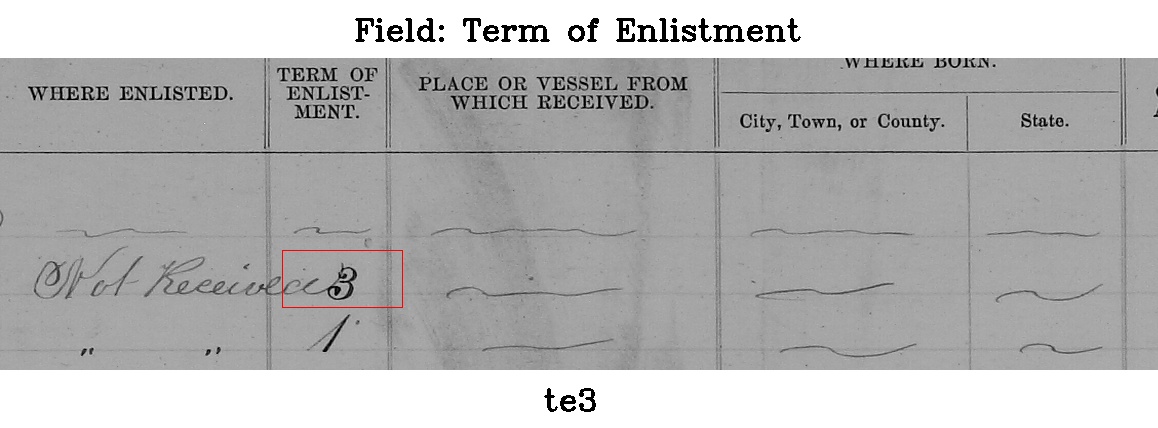
– Term of Enlistment
The length of time a sailor entered the Navy for. In most instances this was either for a period of 1 year or 3 years- and it was most often recorded numerically. Some sheets will also include “yrs” in abbreviated form, which when encountered should be transcribed precisely as written.
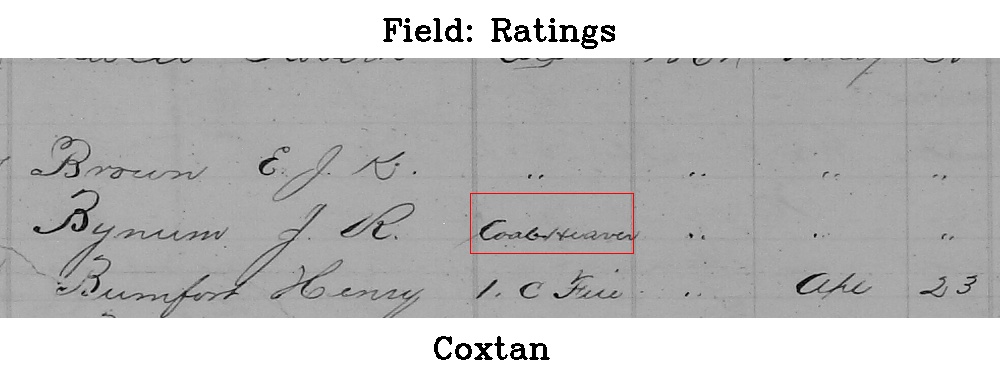
– Rating
This is the naval rating (rank) that the sailor held aboard the vessel. These will often be abbreviated; transcribe precisely what is written in the original document. For a glossary of some of the most commons ranks and abbreviations see the “Ratings” section of the Field Guide.
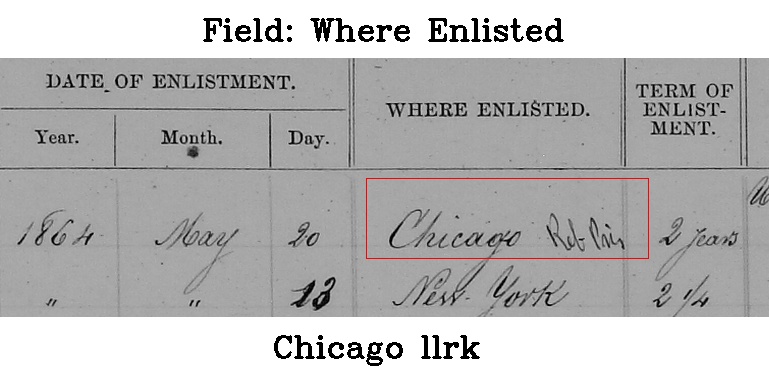
– Where Enlisted
This indicates where the sailor joined. While it will often list a specific city or vessel, this field can also sometimes contain information like “in the army” if a sailor had been transferred from that branch.
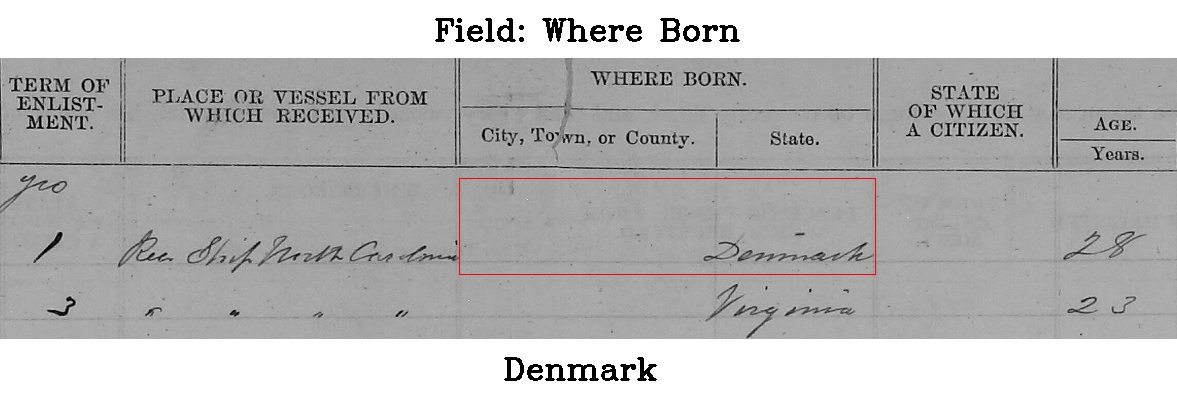
– Where Born
There can be some variance in these entries, particularly with immigrants. Sometimes officers just gave these men’s country of origin, e.g. “Germany” or “Ireland”, at other times they also provide the “City, Town, or County” and “State” of birth. Abbreviations were often used for locations, e.g. “Penna” for “Pennsylvania”. Regardless of how it is presented, seek to transcribe the text precisely as written in the column where it is contained in the original.
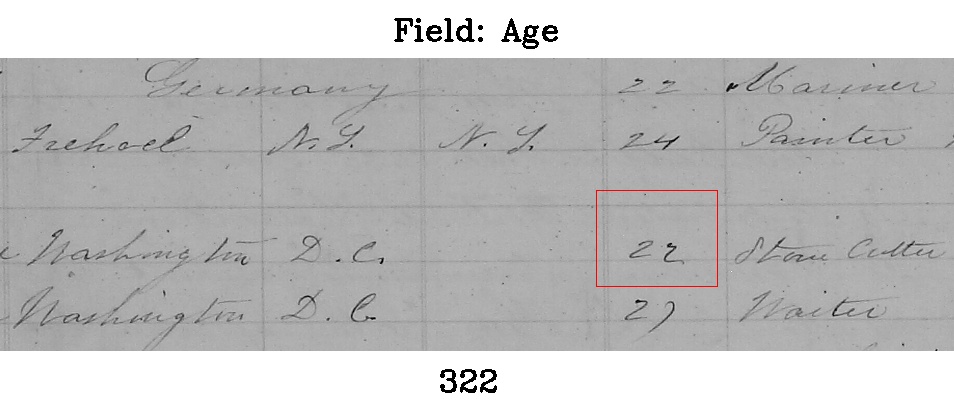
– Age
The age of the sailor, most commonly given in numerals.
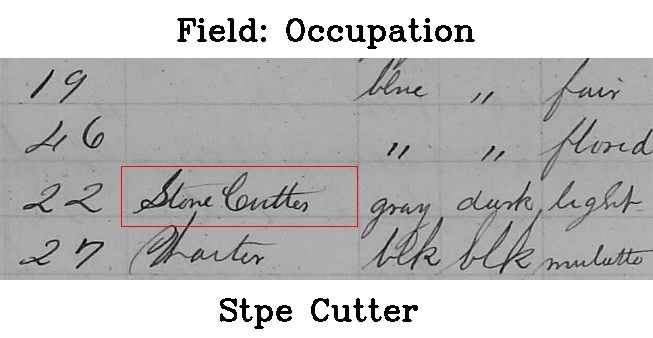
Occupation
The occupation that the sailor held prior to their naval enlistment. These are often abbreviated. In the case of formerly enslaved African Americans, you will often encounter the term “Contraband” here, which was shorthand for “Contraband of War,” a term employed through the conflict that reflected the classification of former slaves as property that could be confiscated from those in Rebellion.
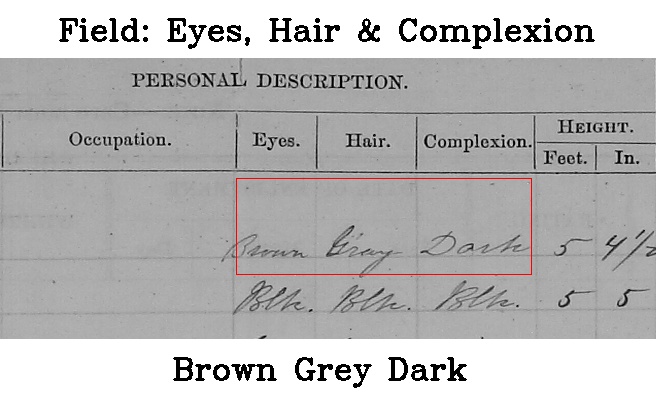
Eyes, Hair, Complexion
This Field (when fully filled in) contains three elements: eye colour, hair colour/type and complexion type. These details were designed to give an indication of what a sailor looked like. You will encounter a lot of “do” for ditto in the physical description; as with the “” encountered in Date of Enlistment field. There can be a lot of variance in the terms you encounter in these fields, especially for African American sailors. For example, African Americans can be described as “black” “negro” or “mulatto” under complexion, while their hair is sometimes not given as a colour, but as a description, e.g. “woolly”. When correcting transcriptions here, separate each element (Eyes, Hair, Complexion) with a space.
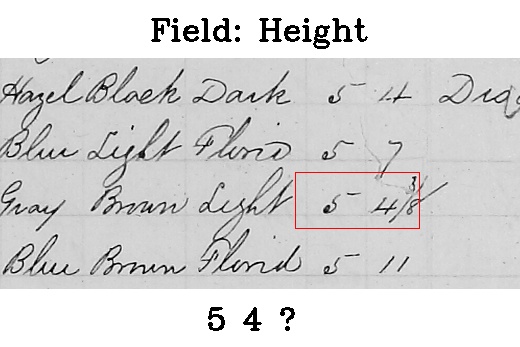
– Height
The height of the sailor expressed in feet and inches. Fractions were frequently used by the officers making these entries, and we are seeking here to transcribe precisely what was written. When correcting transcription, leave a space between the number provided for feet and that provided for inches.







 The Civil War Bluejackets Project