
Common Terms, Locations & Abbreviations You Will Encounter
You will frequently encounter abbreviations in the Muster Rolls, particularly when it comes to locations and naval ratings. It can help in deciphering the text to know some of the most common places and terms that were used (and often abbreviated) by the officers filling out the sheets.
“” and “Do.”
Given the number of fields that officers filling out the muster rolls were expected to complete, it is not surprising to find that they frequently took shortcuts. Along with the use of abbreviations, the most common you will encounter is the use of quotation marks “” and the use of “Do.” (for “Ditto.”). In both cases, these are there to indicate that the information is the same as above. If you need to correct a computer transcription, we want you to record precisely what you come across, so if you encounter them, write down “” or “Do.” as appropriate in your transcription.
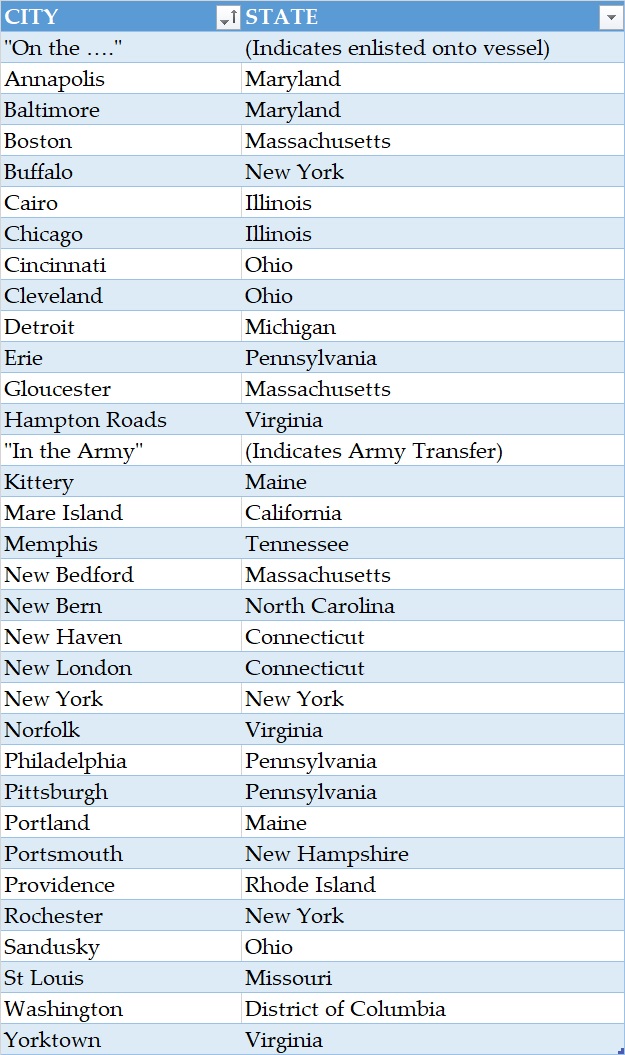
Common Locations recorded in Enlistment Field
The table here presents some common terms you might encounter in the enlistment fields. For most sailors, the location recorded was the city where the Naval Rendezvous they had enlisted in was located. But there are some variances to this; some men joined from locations where a ship was anchored or had stopped off, while others- especially formerly enslaved African Americans- often joined from locations within the warzone as vessels navigated that territory. It is also relatively common to have the names of other vessels recorded in this field- for example, if a sailor joined from another active boat or a receiving ship. Keep in mind that officers often used abbreviations in this column.
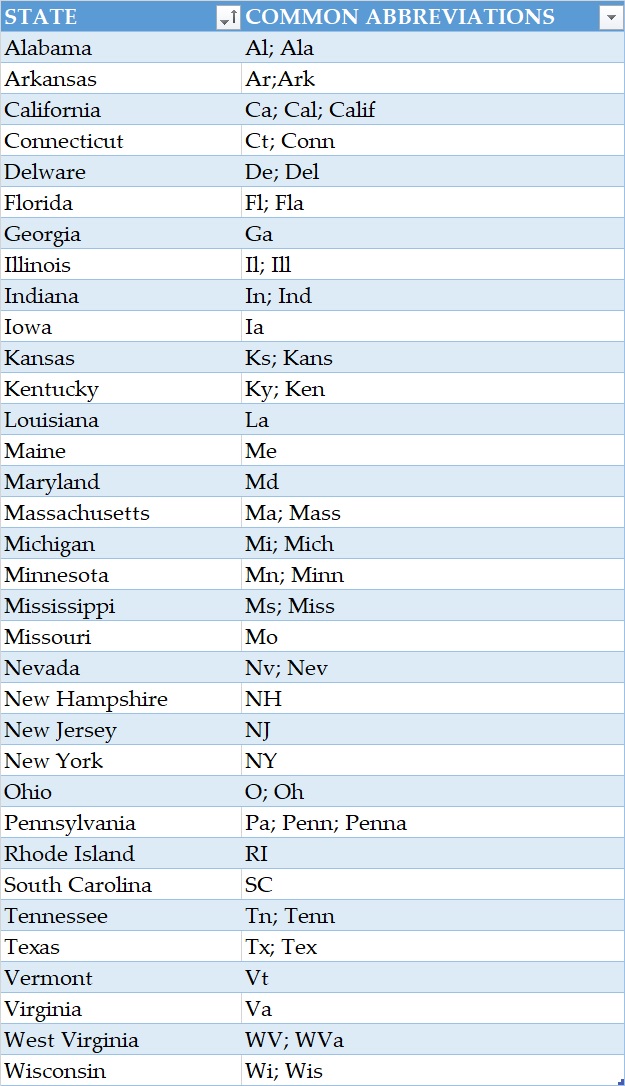
Common State Abbreviations
Some of the most commonly abbreviated words in the musters are those of states of the U.S. While the majority of abbreviations are obvious, some of the lesser-known states can cause confusion, particularly for people outside the United States. The image below contains a list of U.S. states as of 1865, with some of the most common abbreviations you will encounter for them. A reminder here that we want you to record precisely what is written, even if it is an abbreviation-this table is intended to help you decipher what abbreviated text may be.
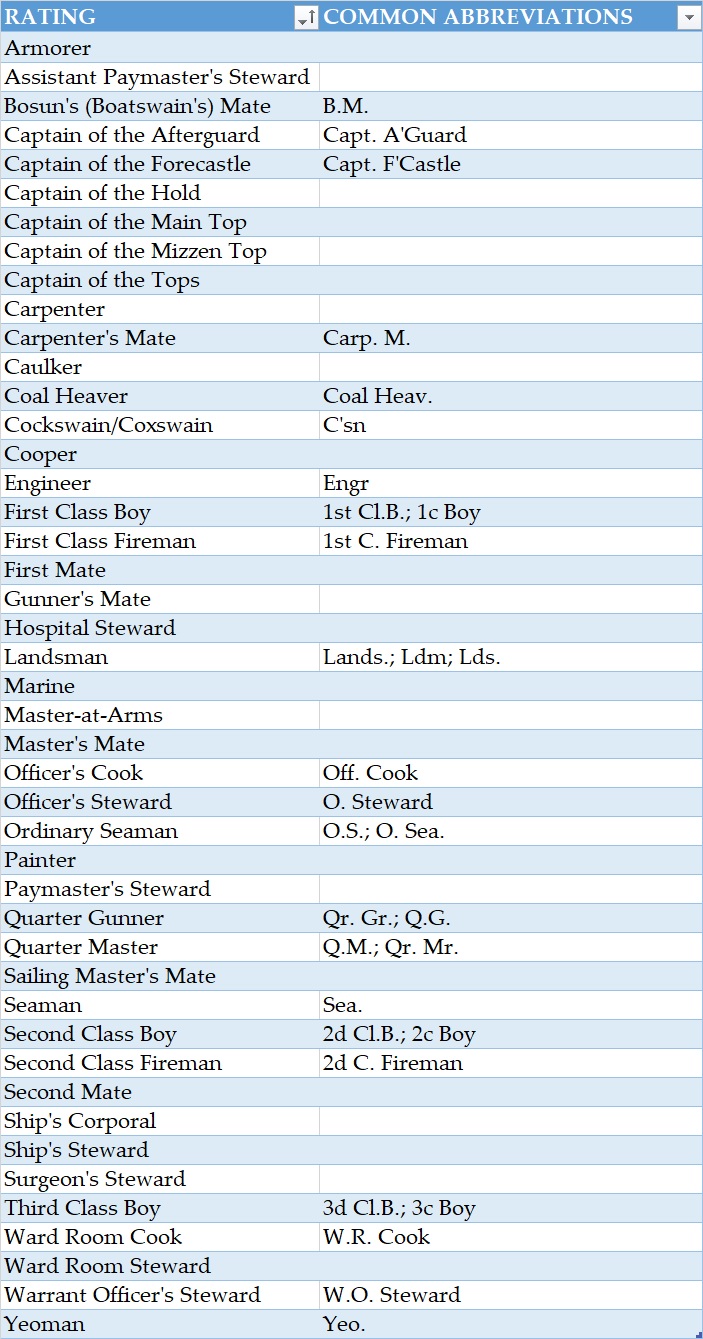
Ratings
Sailors held different ratings, which indicated their occupation and their seniority when aboard ship. There were lots of different ratings in use on U.S. vessels during the Civil War, and they were frequently abbreviated. The table below provides a list of many of them, along with some of the abbreviations you might commonly encounter. Knowing what an abbreviation stands for can often help in deciphering tricky text. Bear in mind that you may occasionally encounter abbreviations not on this table.
Vessel Names
Hundreds of different vessels served in the Union Navy during the Civil War. You will encounter their names frequently, often in relation to where a sailor last served, or was “received” from. The majority of U.S. ships during the Civil War took their name from geographical locations or cities/towns. Others were named for individuals or objects. Many of the names have a distinctive Native American character, often anglicised forms of Native American words for specific locations, such as rivers or mountains. To help you decipher the names you may encounter, we have created an A-Z listing of the ships on the Civil War Bluejackets website. You can access that list here.






 The Civil War Bluejackets Project